
Last updated: May 13, 2026 — Articles 1–9 are live. Additional explainers will be added throughout the week as the full warrant is reviewed. Check back before Town Meeting on May 18.
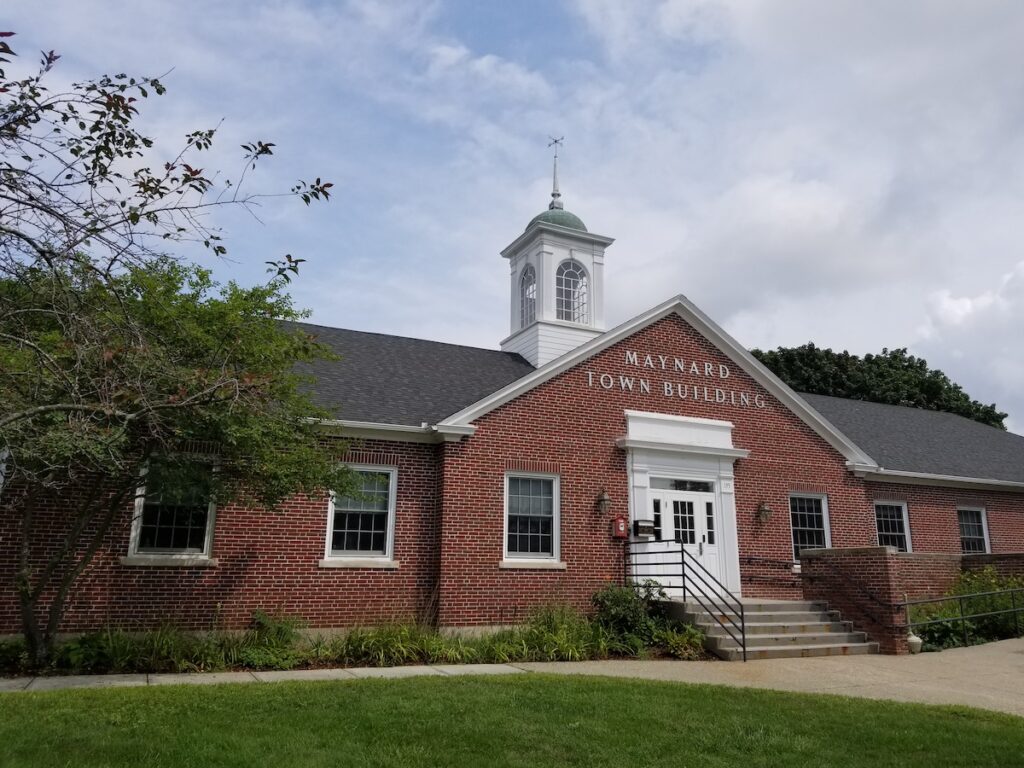
Maynard’s Annual Town Meeting takes place on Monday, May 18, 2026, at 7 p.m. at the Fowler School Auditorium, 3 Tiger Drive.
Town Meeting is Maynard’s form of direct democracy — the night residents gather to vote on the town’s budget, bylaws, and other municipal business. Every registered voter can attend and vote.
New to Town Meeting or want a broader overview before diving in? Start with last month’s primer: What to Know Before Maynard’s Annual Town Meeting on May 18, which covers how Town Meeting works, what to expect and how to participate.
The town has also published official documents for this year’s meeting — including the full warrant, a timeline, and a draft presentation — on the town’s Annual Town Meeting page.
Below, Select Board member Lindsay McConchie breaks down each warrant article in plain language — what it is, why it matters, and how your vote could affect you. These explainers represent her personal analysis and not an official position of the Select Board.
Table of Contents. Click an article to jump directly to its explanation.
- Town Report Acceptance
- Obsolete Equipment, Material
- Prior Year Bills Fiscal Year 2025
- Certified Free Cash Appropriation
- Salary Administration Plan, Fiscal Year 2027
- Retirement Board Stipend
- Town General Fund Budget, Fiscal Year 2027
- Authorize Revolving Fund Expenditures – Chapter 44, Section 53E1/2
- Transfer Funds From Ambulance Receipts Reserved for Lease Appropriation For Fiscal Year 2026
ARTICLE 1: Town Report Acceptance
In brief: This one is basic. Each year, the Town Administrator oversees the writing of a Town Report. Town staff contribute to design and write this compilation of general administrative activity from different Town departments, demographic info, voting results, reports from each of the Town committees, organizational charts and more. It’s packed. Take a look at the page with all previous town reports here. Per our charter, the Town must release this report each year as a summary of administrative activity and we, as voters, have the chance to vote on it or contest something in it.
***Why you might care: The report is a really interesting compendium of day-to-day activity in the administration of the Town and highlights from the past year. It’s 200+ pages so if you’re inclined, print it and read it while you’re having coffee in the morning. Or at bedtime. There is an organizational chart, survey results, data from the police department on all incidents over the year (did you know there were 26 cat-related calls to animal control last year?), a list of all elected and appointed committee members, and more. Chock full of great info!
***How your vote could impact you: Not much, really. A yes vote doesn’t change anything financially and a no vote just means you have to point to what you want changed, and we will likely have to vote on it again in the fall.
ARTICLE 2: Obsolete Equipment and Material
In brief: The Town buys stuff for the day-to-day maintenance of the Town. Trucks, plows, tools, etc. That stuff ages and eventually becomes obsolete. This is an annual, standing article asking people to vote to give the Select board the authority to sell or scrap equipment throughout the year as it ages out of useful existence. But, there is nothing specific noted here. It’s asking voters to say “if a town plow truck dies and we can sell it for scrap metal, go for it.” If you look back, this is an article on every annual town meeting warrant for at least the last ten years.
***Why you might care: Interesting to understand what assets the Town owns, their value, and how they depreciate. But again, this article is not pointing to anything specific. If you want to know more about Town assets and value and useful life, the Capital Planning Committee can tell you more.
***How your vote could impact you: Not much, really. A yes vote just keeps town administration running smoothly throughout the year. A no vote means the Town can’t get rid of old equipment (can’t sell it OR scrap it) and will have to hold on to all of it and come to the next town meeting with an itemized list. And I’ll note here that typically when we get to the point where we are selling something, it’s for hundreds of dollars, not thousands. This is not a major revenue generator for the town, nor does it have the potential to be.
ARTICLE 3: PRIOR YEAR BILLS FISCAL YEAR 2025
In brief: Sometimes, as is the case in a household, you get a bill that is incorrect. You pay the bill but later the vendor comes back to you and says “actually you owe more/less due to a billing error. Due to inaccurate billing from Eversource, the town was not billed correctly. The issue was identified and resolved and the bill was adjusted. So, we now owe a little more. Additionally, in 2023 Boston Mutual Life Insurance raised the rates they charge for town employees life insurance. For reasons I don’t know, Boston Mutual delayed charging the increased rates. So, they are now collecting the additional monies. When a town needs to pay bills from a previous fiscal year with current fiscal year money, that expenditure must be voted on at Town Meeting.
***Why you might care: Just always good to know how your tax dollars are spent! This is money that is paying for services and benefits that were incurred so, we do owe it.
***How your vote could impact you: This won’t impact you financially. Again, these services/benefits were already given and we do owe this money. It’s money coming out of free cash (you will see this in the free cash article a little further down the warrant) so it’s not increasing your bills or your taxes.
ARTICLE 4: Certified Free Cash Appropriation
In brief: What is Free Cash? Free cash is money left over at the end of a fiscal year that we didn’t expect to have. Sometimes we have slightly more revenue than expected. Or, sometimes we plan to spend money on something then, for unexpected reasons we don’t. This “extra” money can be used to pay for one-time things. In Maynard, we mostly use this money to pay for many of our capital expenses (think: vehicles, buildings, major structure repairs and updates, etc.). Free cash is also how we pay for deficits in our snow and ice removal costs – which is a common practice in municipal governance; add money to savings accounts (called “stabilization funds”); and how we fund one-time unexpected expenses, like increases in retirement benefits. I am not going to go through each free cash item but if you have questions on any of them ask in the comments and I can explain (or visit the full warrant which also has some explanations). One thing to know is that the Capital Planning Committee spends MONTHS aggregating and assessing all of the capital needs of each department. They have a rigorous and thorough process through which they assess each need and how it satisfies criteria like public safety, cost savings, urgency, etc. They score each need then discuss the scoring to be sure they are all on the same page, then recommend the top items and their funding sources. For most items in Maynard, the funding source is free cash. So, they never get through the full list but, know that what they do recommend has been heavily vetted and prioritized in relation to other needs.
***Why you might care: Free cash is an interesting topic in town governance. It’s not an insignificant amount of money, and it pays for really important things. Anyone can come to the Town Meeting and make a recommendation from the floor to reorganize the free cash spending. That said, if they do they are likely to upend months of work from the capital planning committee, members of which have thoroughly assessed the capital needs of the town and determined the best use of these funds for the current needs.
***How your vote could impact you: It won’t, really. With one caveat – free cash pays for important things, some of which we are committed to covering the cost of, like retirement benefits and snow and ice deficit. If we vote against free cash allocations, or reallocate it so those things are not covered, we will need to find that money somewhere else in the budget, which could, eventually have indirect financial implications.
ARTICLE 5: Salary Administration Plan Fiscal Year 2027
In brief: Every year, the town sets the pay ranges for employees who are not covered by a union contract or a personal contract. Like a range you’d see in a job posting that says “pays between $X and $Y” — this article sets those $X and $Y numbers for the coming fiscal year. Most of these positions are part-time. A handful are small annual stipends for specific roles.
For FY2027, the town is proposing modest increases. The minimum hourly rate for full-time and specialized non-union employees is going up by $3.50/hour — which might sound like a lot but we haven’t raised the rate since 2019. So, this works out to be about a .50c annual raise for each year since then.
***Why you might care: The town needs to be able to attract and keep good employees. If pay rates fall too far behind what other towns or employers are offering, it gets harder to fill positions — and that affects town services. These increases are modest and long overdue in some cases, and bring the rates to a living wage for the high cost of living in this area.
***How your vote could impact you: The actual dollar impact on your taxes is very small. And this increase does not increase your taxes. The cost is built into the town’s overall operating budget for next year. These are incremental adjustments to pay ranges, not large across-the-board raises. Voting no would leave pay ranges unchanged, which could make it harder to hire and retain staff.
ARTICLE 6: Retirement Board Stipend
In brief: The Maynard Retirement Board manages the town’s pension fund — basically making sure that town employees who retire actually have the money they were promised. It’s an important job with real financial and legal responsibility. The Board is responsible for the administration of benefits, and investments of the assets in the fund. Recently, the state legislature enacted an amendment that gives Towns the option to pay board members between $3,000 – $4,500 per year, in recognition of their increased fiduciary responsibility and accountability. This article is asking voters to approve paying our five retirement board members (3 volunteers and 2 town staff members) $3,000 per year each for the work they do on that committee.
The money to cover the $3,000 per person would come from the return on investment income in the retirement fund, not taxes. However, in the unlikely but possible event investment returns were poor in any given year, and there was not enough money to fund this stipend, the Town would need to pay out the full $15,000 to the whole board. The retirement board has asserted that paying members this stipend ensures that the Town has quality members on the board, and can retain them, and has noted that this does not cost taxpayers anything. That said, there are no other volunteer boards or committees in the Town of Maynard that currently receive a stipend for their work.
Worth noting: this same article was presented by the retirement board at last year’s Town Meeting and it failed — 53 yes, 57 no. It’s being brought back this year without any changes.
***Why you might care: There are two ways to look at this. On one hand, the Retirement Board does real work managing millions of dollars in pension investments, and a $3,000 stipend is a fairly modest recognition for that skilled work and the fiduciary responsibility they take on. On the other hand, this has historically been a volunteer role in Maynard, and there are multiple boards in Maynard that take on fiduciary responsibility and are accountable for the work they do in other ways, and do NOT receive a stipend. It’s up to you to decide (again) if the work of this board warrants this special recognition!
***How your vote could impact you: This would not directly affect your tax bill since it’s funded from pension investment returns, not the town budget. However, every dollar paid in stipends is a dollar not reinvested in the pension fund. Whether that’s a worthwhile expense for the service provided is what you are being asked to decide.
ARTICLE 7: Town General Fund Fiscal Year 2027
In brief: This is the big one — the town’s main operating budget for the coming fiscal year (July 1, 2026 through June 30, 2027). Think of it like your household budget for the year, covering everything from keeping the lights on at Town Hall to paying teachers. This budget represents hours and hours and hours of work from dozens of town employees and volunteers. The revenue expectation is based on some calculable revenue amounts like taxes, and some assumed or estimated revenue amounts like new growth (new growth is new developments like houses and businesses that are new in the fiscal year, that can be taxed and therefore earn money for the Town). The expense calculations are based on things we paid for this year plus inflation and costs that rise for other reasons, and new things we know we need. Full detail in Appendix B. The total budget is $57,554,469.
***Why you might care: More than anything else, this one is important to understand. Not necessarily every single line item in the budget but the fact that we all, as voters, vote on how we spend our money. A budget is a declaration. It’s a moral document that mathematically represents what we value in a community. We value public safety, public works, schools, fair pay, basic municipal needs like water and sewer, roads, trees, etc. It’s your money and this is when we decide how it gets spent.
And we may not all agree on every line item. There might be things in this budget I don’t think we need that you think are absolutely essential. And that’s why you come to Town meeting and vote!!
***How your vote could impact you: Perhaps I’m stating the obvious but this is the budget, which is predicated on taxes you pay, and your vote will determine where that money goes, which is largely to various resources that benefit you as a resident of the Town. So it will definitely impact you. If the budget does not pass, we’ll have to call a special town meeting in a big hurry to try again before the fiscal year starts on July 1. Or operate without a budget until the fall. Doesn’t seem like a great option.
ARTICLE 8: Authorize Revolving Fund expenditures
In brief: What is a revolving fund? A revolving fund is a special fund for something specific, that money can be put into and paid out of, typically to finance cyclical, business-like operations. Fees that are collected for services can be deposited in the account, and the money can be paid out over fiscal years (but only for that specific purpose), making these funds flexible. This article is asking the Town to approve the limits for these special funds, listed in the warrant.
***Why you might care: This is largely a housekeeping vote — these funds already exist and are funded by fees, not your taxes and a yes vote just allows the Town to collect fees and pay its bills for the stated purpose. But it’s good to know that the town is running self-funded programs for things like the COA van and EV charging stations.
***How your vote could impact you: This doesn’t directly affect your tax bill — these funds are fed by user fees, not tax dollars. You are just voting to allow the Town to keep doing its business. Voting no would prevent the town from being able to spend money that’s already been collected for these specific services, which also would not effect you financially but would be disruptive. This is generally considered a routine annual approval.
ARTICLE 9: Transfer of Funds from Ambulance Receipts for Lease Payments
In brief: When you need a ride in an ambulance, most of the time, you have to pay for that ride. The money earned for that goes into a fund that is then used to pay for ambulances and emergency service equipment. Whenever a town government wants to spend money earned in this way, at this level, and on equipment like this Town Meeting has to weigh in. So, this article is asking voters to approve the transfer of money earned from ambulance rides over to an account that can pay out the annual payments for an ambulances and a fire truck.
***Why you might care: This is a good use of town finances — the town is using money generated by ambulance services to pay for the very equipment that provides those services, rather than tax dollars. It’s essentially self-funded.
***How your vote could impact you: This will not impact you financially. The funds come entirely from ambulance billing receipts. Moving this money from one account to another just allows the Town to keep up with payments for our vehicles. Voting no would mean the town misses a scheduled lease payment on critical emergency equipment, which would not be a good outcome.
ARTICLE 10 – GENERAL FUND CAPITAL OUTLAY
In brief: Over the years, Town Meeting has approved money for specific projects — a new fire truck, bridge repairs, field improvements, and so on. Sometimes a project comes in under budget, gets cancelled, or just never gets started. That leaves small (and sometimes not so small) amounts of money sitting in old project accounts, unused. In order to move that money into accounts where it can be spent on something else (in this case our bills for snow and ice removal this winter, and a savings – stabilization – account), Town Meeting needs to vote on the move.
This article is asking you to say “OK” to the town using the unused money sitting in those funds by transferring it elsewhere.
***Why you might care: This is good financial housekeeping. Rather than letting old money sit dormant in project accounts, the town is putting it to work covering real expenses and building up the rainy day fund. It also frees up free cash for other purposes.
***How your vote could impact you: This doesn’t increase your taxes — it’s money the town already has, the Town just needs to formality of Town meeting approving the move into a different account to pay those bills listed.
ARTICLE 11 – MAYNARD GOLF COURSE RECEIPTS TRANSFER
In brief: The town owns the Maynard Golf Course and Club house, and the business is managed by a private company called Sterling Golf Management. Per their contract, Sterling pays the town a share of the revenue it generates. This article asks to take $76,756.84 of that revenue and put it into a dedicated account for capital improvements to the golf course facilities. Capital improvements are things like the roof, the exterior of a building, large vehicle purchases, etc.
The big picture here is that the roof of the building is in bad shape, and has been causing internal damage and structural problems for years. A full replacement is estimated at over $780,000 (and that’s an old estimate). The town has been deliberately saving up golf course revenue year over year so, if we decide to fix the building we will eventually have enough to take out a loan to pay for the repair. A Golf Course Advisory Task Force has been appointed to consider the current state of the property and what the Town might want to do there, and advise the Select Board on a plan. Worth noting: While the senior center will soon relocate to 141 Parker street, they are still operating out of this building.
***Why you might care: Good to know that the Town does make money off of the golf business at that property. Also good to understand the real issues with the building, and the true cost to repair it. Is it worth it? That is what the advisory Task Force will consider, and offer advice to the Selectboard about when they have looked at the issue from all sides. The good news is that the town is using golf course revenue — not tax dollars — to save up for whatever the plan will be.
***How your vote could impact you: This does not directly affect your tax bill — it’s golf course revenue being reinvested in the golf course. Voting no would mean that revenue sits somewhere the Town can’t use it.
ARTICLE 12 – CONTRACT LENGTH AUTHORIZATION FOR POLICE BODY CAMERAS
In brief: Massachusetts law limits contracts of more than 3 years without the approval of Town meeting. Sometimes, as in this case, it is advantageous to sign contracts with vendors for longer than 3 years, for better terms and pricing.
The Maynard Police Department has been awarded a $72,000 state grant to purchase body cameras and related equipment and services. As a best practice for price advantages and generally more efficient process, we go through the state’s already approved list of procured vendors. They are already verified as legitimate. The vendors on that list who can offer services for body cameras offer contracts with terms of 5 years. So, Town meeting needs to approve the Town entering into a contract agreement for more than 3 years (but, less than 15). Note that this article isn’t asking Town Meeting to approve the use of body cameras, that is not necessary here. It is asking the Town Meeting body to allow the Town to enter into a contract agreement longer than 3 years.
***Why you might care: Good to know what contractual agreements any department in town is entering into. Those agreements usually mandate payment, (though in this case this is funded by a grant) and those payments are made with tax dollars. As far as contract go, 3 years is not terribly long, and a longer period better positions us for negotiation on prices and terms, and just generally offers better consistency in a program, which produces better outcomes.
***How your vote could impact you: There is no appropriation attached to this article — the cameras are being funded by the state grant, with a small amount coming from the police department budget each year to cover the remaining amount. Voting yes allows our police department to secure a contract for body cameras. Voting no would prevent the town from being able to sign the necessary contract, effectively blocking the use of $72,000 in grant money that’s already been awarded. After the grant runs out in 5 years, the Town would need to secure another grant to help cover the cost, or cover the cost of the program through operating funds.
ARTICLE 13 – LEASE OF A SECTION OF THE RESERVOIR LOT OFF SUMMER STREET
In brief: The town owns a piece of land off Summer Street called the Reservoir Lot, up on Summer Hill. Up there you’ll find the town’s water towers, and also two fenced areas with cell tower equipment. Last year, Town Meeting voted to authorize a lease for the smaller of those two fenced areas — that one was leased to AT&T in late 2025 for 15 years.
This year’s article is about the other, larger fenced area — the one with the full cell tower, an equipment building, and a large satellite dish. Those areas are currently leased by a company called American Tower, and that lease is expiring. As was the case last year, this gives us the opportunity to “put this out to bid” (meaning take in other proposals from other potential lessees). Doing so might yield more income or better lease terms for the Town. This article is asking voters to give the Town staff the authority to procure a new lease agreement (maybe from American Tower, maybe from someone else), and negotiate a lease that will last up to 30 years. Longer lease terms make the Town’s negotiating position stronger.
***Why you might care: Again, this is Town property and residents get to have a say in how we use it. Cell tower leases are a source of revenue for the town — essentially rent paid by a telecommunications company to use town-owned land. Renewing this lease maintains that income stream. The town is required to run a competitive bidding process, to prevent favoritism.
***How your vote could impact you: There is no cost to taxpayers here — if anything, this generates revenue for the town. No additional taxes or fees here. Voting no would leave the town unable to sign a new lease when the current one expires, potentially losing a steady stream of rental income from a town-owned asset.
ARTICLE 14: COMMUNITY PRESERVATION FUND BUDGET, FISCAL YEAR 2027
In brief: Back in 2007, Maynard voters agreed to add a small surcharge — 1.5% — on top of residential real estate taxes, and to use that money for a special fund dedicated to preserving and improving the community. That fund is called the Community Preservation Fund, and it’s managed by the Community Preservation Committee (CPC). The state also chips in a partial match, which is essentially free money for the town. The total amount is about $450,000. Of that, $132,550 goes toward actual spending — mostly to finish paying off the debt from when the town bought the municipal golf course land back in 2012 (this is actually the final payment on that debt, so that’s done after this year). The rest gets divided into reserve buckets — Historic Preservation, Open Space, and Community Housing — that community groups and town departments can apply to tap into for specific projects, usually in the fall. This article is asking voters to approve $450k in Community Preservation Funds to be distributed by the committee in accordance with the state Community Preservation laws.
***Why you might care: The CPA is a great program the helps towns preserve open spaces, save historic sites, and support outdoor recreation and affordable housing. AND we get a state match on what is raised from local property taxes. It’s a large chunk of money that Town doles out for small projects that benefit Maynard, and are recommended by the CPC. Good to know how it works and how it’s used. If you have an idea for a project that CPC funds could support, apply! Info on the town website.
***How your vote could impact you: If you own residential property in Maynard, you are already paying into this fund through that 1.5% surcharge on your tax bill. This article doesn’t change that — it just authorizes how the money already being collected gets used.
ARTICLE 15: COMMUNITY PRESERVATION RESERVE FUND APPROPRIATIONS, FISCAL YEAR 2026
In brief: OK this may seem confusing given the last article but basically, while in the last article we were voting yes or no to give the CPC authority allocate the anticipated FY27 tax revenue from the Community Preservation Act tax surcharge, in this article we are voting yes or no to authorize spending the money on projects that have already been submitted, and are recommended by the CPC. There are four projects and they are listed in the warrant.
***Why you might care: Again, CPA funds are local and state tax dollars so, always good to know how they are being spent! These are small projects that benefit Maynard.
***How you vote could impact you: Voting yes won’t increase your tax bill. The 1.5% was voted on years ago, and this money has been collected. This is just allowing the town to use the money.
ARTICLE 16 & 21: WATER ENTERPRISE FUND BUDGET FY27 & SEWER ENTERPRISE FUND BUDGET FY27
In Brief: I am bundling these two together to simplify, as they are asking for the same action for two different, but similar funds. This bundling of a few different but similar articles will likely also happen during the article presentation at Town meeting. Keeps things moving quickly. These articles are procedural. What these articles are asking voters to do is adopt these budgets for water and sewer operations in the Town. We pay for both water and sewer, so the money we pay covers the cost of these budgets (full budgets outlined in the warrant). When we pay our bills for water and sewer, that money goes into an “enterprise fund.”
What is an “enterprise fund”? As a reminder from last year: Basically just a place where money that the town charges for a service is parked to make the budgeting transparent and clean. Imagine you have a side hustle selling homemade soap. You set up a bank account for the sales income of the soap, and to purchase materials to make new soap, market your soap, ship your soap, etc. All the money associated with running your soap business goes into and comes out of that bank account. That is pretty much what an enterprise fund is.
***Why you might care: Good to know how much it costs to operate our water and sewer in the Town. As I am sure you’ve heard, our water infrastructure is badly in need of upgrades, some of which we are able to save and plan for in the short (ish-like, 5-10 years) term, some of which are further out. Knowing these budgets helps put the capital needs to improve infrastructure into perspective.
***How your vote could impact you: The water and sewer rates for FY27 were already approved by the Select board in April 2026 at a public hearing. While the rates will go up to cover the rising costs of water and sewer, and to work our way to some of those infrastructure improvements, this article is not changing the rates. A yes vote just allows the water and sewer department to pay the bills.
ARTICLE 17 & 22: WATER RETAINED EARNINGS TRANSFER, FY27 WATER ENTERPRISE OPERATING BUDGET RESERVE FUND & SEWER RETAINED EARNINGS TRANSFER, FY27 SEWER ENTERPRISE OPERATING BUDGET RESERVE FUND
In brief: Again, bundling similar articles. Some definitions first because this language is old and confusing! What are “Retained Earnings?” An enterprise fund (defined in a previous post) earns money for a service provided by the Town. The Town then uses that money to pay for the cost of delivering the service. Sometimes, there is a little money left over. These are “retained earnings.” What is a “reserve fund?” A reserve fund is like a savings account for unexpected expenses. It can be used to cover capital costs, unexpected legal fees, equipment repairs, etc. Money has to be moved INTO a reserve account from some other source to be able to use it. In Town governance, it’s not easy to use retained earnings sitting in an enterprise account because it requires that the legislative body (that’s you! At Town Meeting!) approves the expenditure. So if we had a sewer truck that needed $20k in immediate repairs in January, the sewer department would have to wait until Town Meeting to make that money available and go without a truck until that time. When money is used from a reserve fund, it only needs approval of the finance committee and the selectboard. This moves money from one account to another to make the day-to-day operations of the water and sewer departments efficient.
***Why you might care: This is all very confusing given all the various kinds of accounts and how they can be used, so it’s helpful to understand what is what here. Because ultimately, the extra money here is money we all paid for our water and sewer. It’s good to know what it’s being used for and when.
***How your vote could impact you: A yes vote will not cost you any additional money. This is just moving money that has already been paid from on account to another to make it easier to access in an emergency.
ARTICLE 18: FY27 WATER RETAINED EARNINGS TRANSFER, WELL 4A (8) PROJECT CLOSE
In brief: As you may know, the town has been working toward fixing our water capacity and quality issues. It’s an uphill battle and a long road but, we are chipping away at it. There is a full master plan on the town’s website that outlines every phase of the project. Upgrading Well 4A was part of Phase 1 to improve our capacity. That roughly $8 million project is now wrapping up, and there’s a final bill of $148,413.10 to close it out completely. Rather than borrowing that money (which would add to long-term debt), this article asks voters to approve using surplus funds that the Water Department already has sitting in its retained earnings (defined in a previous post) account — essentially the Water Department’s savings from last year.
***Why you might care: Again, good to know where the money is being spent. People often complain that the budget isn’t transparent enough and/or accuse the Town and specific departments of mismanaging funds. But, it’s all pretty transparent and accounted for! As these last few articles demonstrate, it’s not easy to just spend money on whatever. Town departments are beholden to these laws that govern when voters need to vote to approve expenditures. This is how responsible municipal finance is supposed to work — using cash on hand instead of borrowing to close out a project, which saves money on future interest payments.
***How your vote could impact you: Financially this will not impact you. A yes vote closes out the project reduces long-term debt. A no vote leaves the project financially open and likely forces the town to borrow instead — which costs more in the long run.
ARTICLE 19: WATER PROJECT BORROWING AUTHORIZATION
In brief: Maynard’s water system needs more capacity and redundancy — meaning if something goes wrong with one well, the town needs backup. The Water Master Plan (you can find that on the Town website) has identified the need for two or three new drinking water wells plus upgrades to the Rockland Avenue treatment facility, including equipment to remove PFAS (the “forever chemicals” that have become a major drinking water concern across Massachusetts). This $3 million borrowing authorization covers the engineering and design phase only — not construction yet. We pay outside engineers to design the process. Think of it as paying for the detailed blueprints before breaking ground. The town is pursuing a loan through the state’s Clean Water Trust, which typically offers better rates than conventional borrowing. Worth noting: making the regular payments for borrowing this money will not come from increased taxes, it will come from the money generated by water and fees.
***Why you might care: I don’t think anyone in Maynard doesn’t know about the need to improve our water infrastructure. This article is another step moving us along in our master plan to fix some of our water capacity and quality issues – i.e. more available water that allows us to say yes to more development, which creates more tax sources which benefits all of us AND, helping with the brown water issue some residents experience. This also helps us address PFAS contamination which is widespread.
***How your vote could impact you: The 2% water rate increase already adopted for FY27 is intended to fund this borrowing — so ratepayers are already absorbing the cost. A yes vote moves the master plan – intended to identify a phased solution to our water issues – forward. A no vote stalls it.
ARTICLE 20: PFAS SETTLEMENT AWARD FUNDING
In brief: Maynard joined a nationwide lawsuit against the manufacturers of PFAS — the “forever chemicals” that have contaminated drinking water supplies across Massachusetts and the country. The town was awarded settlement money from that litigation — $662,255.42 — and it’s been sitting in a dedicated settlement fund. This article asks voters to move that money into the Water Improvement Fund, where it can actually be spent on water infrastructure, maintenance, and operations.
***Why you might care: This is a great step toward helping Maynard and other municipalities recover from the vast water contamination that took place over years by holding accountable the companies that knew they were contaminating waterways and did it anyway. The funds will go directly toward fixing the very problem those polluters created, including the PFAS treatment upgrades discussed in Article 19.
***How your vote could impact you: A yes vote puts over $662,000 in settlement funds to work improving Maynard’s water system, at no additional cost to taxpayers or ratepayers. This will not increase your taxes. A no vote just leaves the money sitting unused.
ARTICLES 23 AND 24: SEWER RETAINED EARNINGS TRANSFER, CAPITAL EQUIPMENT & SEWER RETAINED EARNINGS TRANSFER, ROTATING BIOLOGICAL CONTACTOR
In brief: Bundling these as this ask is the same, but for two different pieces of equipment. Similar to article 18, this is asking voters to use some of the retained earnings in the sewer enterprise fund (see definitions for enterprise fund and retained earnings in previous post) to make capital purchases. Capital expenses are things that cost more than $25k and will last at least 5 years. In this case, a service truck and something call a rotating biological contractor (RBC). You can read more in the warrant (or ask google) what that is and what it does. The current truck we have no longer works and can’t be fixed, and the RBC is an integral part of the wastewater treatment process. The Sewer department needs vehicles to run their day-to-day operations, and we need to treat our wastewater by law, and this article is asking voters to use the extra money in retained earnings to pay for those things.
***Why you might care: Again, good to know where the money is being spent. This is transparency in government! Again, can’t just spend the money wherever. Town departments are beholden to these laws that govern when voters need to vote to approve expenditures.
***How your vote could impact you: A yes vote will not cost you any additional money. It is just authorizing the Town to use the money they already have to buy the equipment they need.
ARTICLE 25: Citizens Petition, Regulation of outdoor lighting.
As I always do, I am going to skip the Citizens’ petitions, because they are not sponsored by the Town. There is extensive information in the warrant about each, and there is info around on facebook. Additionally, there will be a presentation at Town meeting during which residents can ask question. I encourage you to read the article in the warrant.
ARTICLE 26: SOLID WASTE AND RECYCLING ENTERPRISE FUND BUDGET, FISCAL YEAR 2027
In brief: At a Special Town Meeting in October 2024, Maynard voters approved creating a dedicated Solid Waste and Recycling Enterprise Fund (see previous post for definition of an enterprise fund) — essentially a self-contained budget for trash and recycling that is funded by fees charged to residents for the service, and runs on its own revenue rather than being a lump sum coming out of the general fund. The town is now ready to roll out this program, and this article is asking voters to approve spending the revenue from the fees that will be collected, on the cost of the program. The total cost and the line item expenses are outlined in the warrant. Most of it will go to operating expenses – i.e. paying a vendor to collect the trash and haul it away, and another vendor to dispose of it. This article is NOT asking voters to approve the program, it’s a technical approval of the money expenditure. That said a “no” vote here would not allow the program to move forward. The consequences of that are outlined below.
Worth noting – this new program allows us to have public trash receptacles in the downtown!!! Worth it, IMO!
***Why you might care: This is the article that actually funds the new automated curbside trash and recycling pickup. If you live in Maynard, this directly affects how your garbage gets collected starting this summer. This will change the process for all of us so it’s important to pay attention. If you want to use the Town’s service, you will need to sign up online. As has been noted and discussed, the previous version of our funding structure pulled money out of the general tax revenue fund to cover costs for this program. Stickers only covered about half of it. As the cost of trash and recycling increases dramatically for everyone everywhere (not just Maynard), a fee program offers a more fair way of paying for solid waste and recycling removal. It also exempts those who use a private hauler from contributing to something they don’t use (because they are currently subsidizing solid waste an recycling pick up through their taxes). As I’ve said before, trash is a problem locally, nationally and globally. We all need to figure out how to deal with it. Establishing a logical, fair, phased approach that will bring us all closer to accurately paying for what we each throw away is in our best interest. Remember, right now you may throw away very little but through your tax dollars you are paying for other people in Town who throw away a lot. Also, your sticker does not cover the full cost of the trash hauling or the recycling service. It never has.
***How your vote could impact you: This is a fee for service. If this is passed with yes votes, the program will begin on July 1, 2026. You will no longer use stickers, and you will pay your trash and recycling bill the same way you do your water and sewer bill. Depending on how many stickers you use per month right now, this will likely increase your bill. I won’t go into all of the program details, as there will be a brief presentation at Town meeting. A no vote on this could mean all trash and recycling pickup through the Town will end on July 1. You will need to find a private hauler for your trash and recycling, which can range from $35-$60+ per month. Another thing that could happen if this vote fails – real-time at Town meeting – is a reallocation of free cash to cover trash and recycling expenses, and an ask to approve pulling money from reserve funds to pay for the trash and recycling. And sticker prices would go up, quite a bit. This would mean none of the items in free cash would be funded, and we would spend down our savings accounts. And we would need to address this again in the fall or next spring at Town Meeting.
ARTICLE 27: CITIZENS’ PETITION: RESOLUTION IN SUPPORT OF CHANGING THE STATE FLAG & SEAL OF MASSACHUSETTS
Again, Citizens Petitions will be presented by residents at Town meeting and are not sponsored by the Town so, no comment on this one! But, I encourage you to read the warrant for more info.
ARTICLE 28: ZONING BY-LAW UPDATE: SECTION 3.1.2 TABLE BUSINESS USE REGULATION, REGISTERED MARIJUANA DISPENSARY
In brief: What are zoning by-laws? Overall definition of a by-law in a previous post but more specifically, zoning by-laws locally control how land can be used and what types of buildings can be constructed, and in which areas. The Planning Board is a volunteer board – appointed by the Select Board – that is tasked with writing, editing and updating the Town’s zoning by-laws, reviewing and acting on site plans and subdivision reviews and approvals, and granting special permits for developments. They do a LOT.
Right now, Maynard’s zoning rules dictate that recreational marijuana shops are allowed in the Central Business District (downtown) by special permit, but medical marijuana dispensaries are not. This article changes that by also allowing medical dispensaries in the Central Business District under the same rules as recreational shops — meaning they’d need to apply for and be approved through a Special Permit from the Planning Board.
***Why you might care: Maynard has no cap on marijuana licenses so any number of stores could apply. That said, there doesn’t seem to be a rush of medical marijuana businesses banging down the doors. But, this could add to our sum total of marijuana businesses in the downtown area. These are businesses that many residents cannot go into, and businesses that can’t display their product in their store front (state law) so have an empty but blocked off storefront, or sometimes artwork in their windows. Also worth noting that while recreational establishments generate tax revenue, medical marijuana establishments do not garner any tax revenue for the Town. All that said, some feel that it is unfair to allow recreational marijuana, but not medical in the downtown district (it can be viewed as discriminatory), so this might feel like an equity issue for you. This also means a business could potentially operate both medical and recreational under one roof.
***How your vote could impact you: This doesn’t automatically put any new dispensaries on Main Street — it just makes them eligible to apply. This also does not effect you financially. A yes vote would allow for medical marijuana establishments to apply for a special permit to operate in the downtown business district. A no vote would mean they cannot set up shop in the downtown area.
ARTICLE 29: BY-LAW AMENDMENT, DOG LICENSES
In brief: First, what are town by-laws? Town by-laws are our Maynard-dictated local laws and regulations that govern a variety of aspects of community life – everything from how our boards are structured to our local safety regulations to fines we can impose and for what we can impose them. In tandem with the Town Charter, they dictate how we run our town. Obviously they can’t violate state or federal laws. These by-laws are living documents, meaning they can be altered and changed and updated to better reflect the current state of the town, demographics, local needs and more. But, this is where you come in…while changes can be recommended by our boards (like zoning and planning) they MUST be voted on by the Town meeting (that’s you!).
This article updates Maynard’s dog licensing by-laws for two reasons. First, a new state law called “Ollie’s Law,” effective December 2024, changed how Massachusetts regulates dog and kennel licensing, and the town’s by-laws need to be brought in line with it. Second, this raises dog license fees which haven’t been updated since before 2013, and increases late fees for not registering your dog.
***Why you might care: If you own a dog in Maynard, you’ll see an increase of 25% – 50% in your annual licensing cost. The changes also clean up kennel licensing rules and streamline some administrative language. Good to have by-laws that reflect state law. That said, while these fees haven’t been increased in over a decade, and we can assume costs to manage the program have certainly risen in that time, it’s unclear exactly how much it does cost to manage our dog licensing program. So, some might consider the fees unjustified without that figure.
***How your vote could impact you: For most dog owners, this means $5 more per year and a scaled up late payment. A yes vote brings the town into compliance with state law and increases fees. A no vote could leave the town out of compliance with Ollie’s Law.
ARTICLE 30 and 31: CITIZENS’ PETITION: ZONING CHANGE, 141 PARKER STREET& CITIZENS’ PETITION: TAX TITLE PAYMENT AGREEMENTS
No comment.
ARTICLE 32: TRANSFER FROM CAPITAL STABILIZATION
In brief: First, some definitions – what is “capital stabilization”? A stabilization fund is like a savings account that can be used for emergency or unforeseen expenses. It’s a rainy day fund for a town. In order to use the money in that account, the legislative body (that’s you, at Town Meeting!) must vote on the specific use each time we need to take money out of the fund.
In this case, the request is to pull a little money out to help pay for police cruisers, which are replaced in a rotating cycle. Police cruisers are a capital expense. Maynard’s typical method for covering capital expenses is for the Capital planning Committee (a group of volunteers appointed by the Select Board) to consider all of the capital expense needs across all departments (things like trucks, HVAC systems, roofs, etc.) and determine which are the priorities each year. They go through a lengthy process to do that. The way we pay for many of those things is through our free cash (see the Free cash article for a definition of what that is). This year free cash is just slightly short to cover the full cost of the police cruisers needed. So, this article is asking voters to say “ok” to the Town pulling money from that savings account to cover the remaining cost.
***Why you might care: As I always say, good to know where the money is going! And, it’s helpful to know how things get funded and from where.
***How your vote could impact you: This will not increase taxes or fees or other expense for you. This article allows the police department to purchase the vehicles they need for day-to-day operations.


Leave a Reply