
SUMMARY: The Fine Arts Theatre turns 77 this June. Prior to its opening in 1949, there were nearly 50 years of motion picture showings in Maynard, starting with entrepreneurs bringing projectors and films to existing meeting halls, then culminating with the opening of People’s Theater — seating 700 — in 1921. The Fine Arts was family-owned from 1949 to 2013, first by founder Burton Coughlan and then his daughter Linda (Coughlan) Flint. Steven Trumble bought and renovated the theater, operating it until his untimely death at age 67 in 2021. The theater complex, with three screens and an adjoining ice cream shop, now operates under the ownership of Dafna Krouk-Gordon.
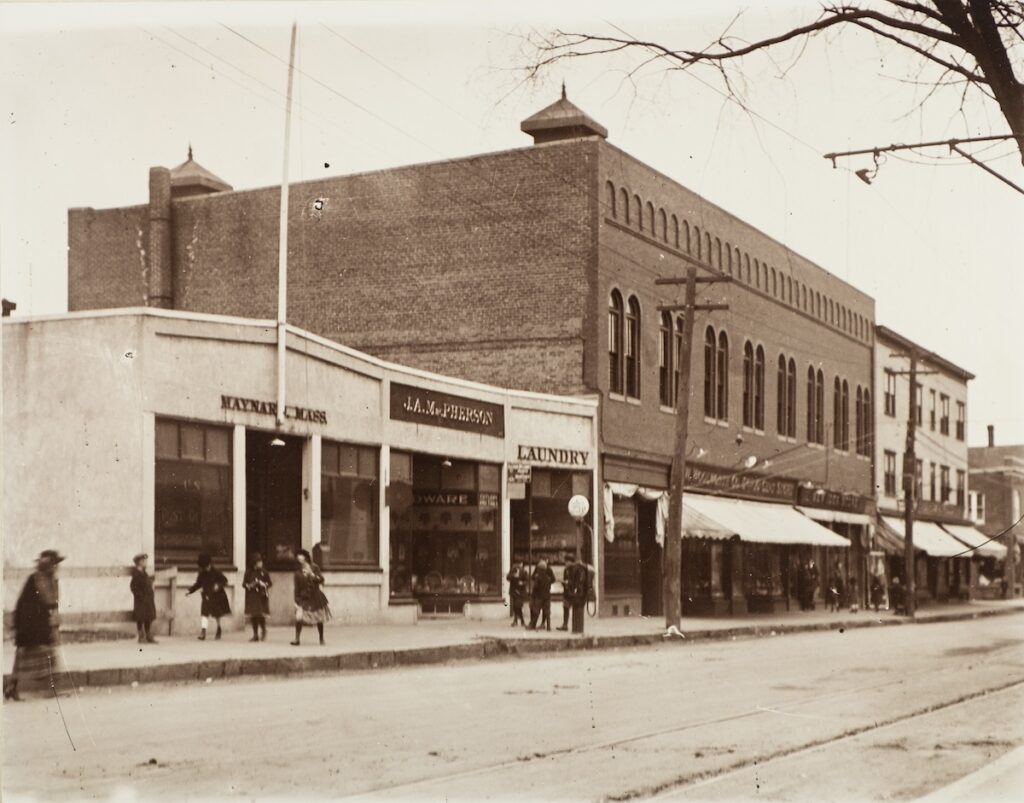
As early as 1902, silent movies were being shown in Maynard in the meeting hall of Riverside Co-op. Maynard was at that time a mill town with a population of around 7,000. Entrepreneurs would come to town with their projectors, rent space in a meeting hall and charge admission. Not here, but in larger cities, there had been a brief vogue for kinetoscope parlors that had its start in 1894. A kinetoscope was a floor-standing device about four feet tall with an opening in the top for one eye. Inside, after depositing a nickel in the pay slot, film would pass between an electric light and the eyepiece, providing 15-20 seconds of silent moving pictures. These could be snippets of well-known vaudeville acts, filmed by Thomas Edison in his movie studio. Other producers filmed boxing exhibitions, gymnasts and more. Within months after the first parlor opened in New York City, there were arrests in San Francisco and elsewhere for showing pornography.
Within a year, machinery and film quality had improved to the point that movies up to 10 minutes in length could be projected onto screens for a seated audience. Early attempts to provide sound by operating a phonograph alongside the projector failed, so venues would hire a piano or organ player to face the screen and provide appropriate music. Word panels in the film provided dialogue (which required audiences to be literate). Some films were sing-alongs, with lyrics superimposed on the images; movie halls would hire local singers to lead the songs. Motion pictures with sound and theaters with speaker systems did not become common until well into the 1930s.
Leap forward a couple of decades and there were three movie houses in Maynard — Colonial and Riverside, which were meeting halls set up with folding chairs, and People’s Theater, built in 1921. The latter had a main floor, balcony seating and a glorious chandelier in the lobby. The Colonial, also known as the Strand, was on the second floor of the building that now has the Roasted Peppers restaurant on the ground floor. Riverside, also known as Maynard Theatre, was the third-floor meeting hall of an 1868 building known as Riverside Block. Its theater era ended when much of the building was destroyed by fire in 1934. It was rebuilt as Gruber Bros. Furniture, since torn down, and is now the site of an apartment building across the parking lot from CVS.
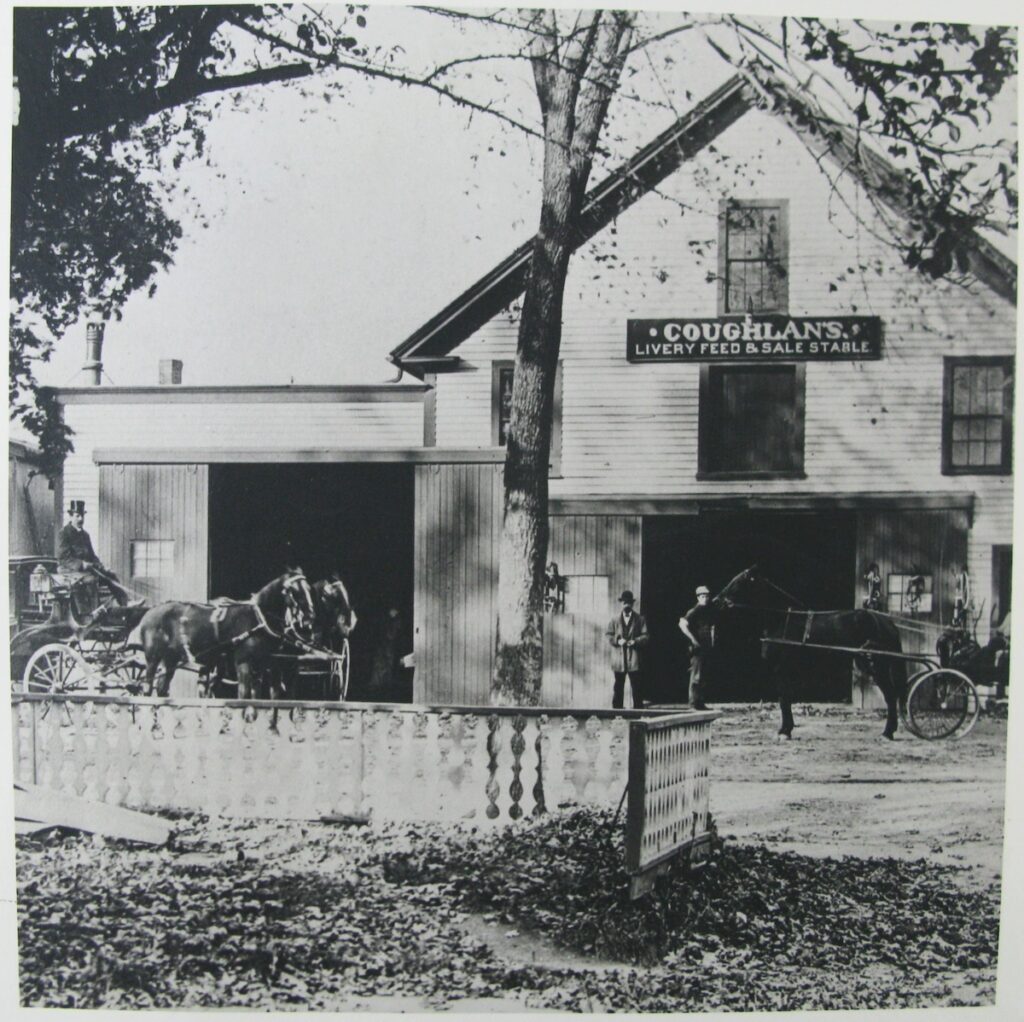
Meanwhile, on Summer Street, James Coughlan — second-generation son of Irish immigrants — had opened a horse livery business in 1897, then converted it to an automobile sales and repair shop in 1913. James was also one of the co-founders of People’s Theater. His son, Burton J. Coughlan, born in 1904, was of an artistic and theatrical bent through high school. He had applied and been accepted to the Massachusetts Institute of Technology before changing his mind and attending the School of the Boston Museum of Fine Arts.
Soon after graduating, Burton returned to Maynard, where he took a job in 1929 as manager of People’s Theater. Around 1947 he decided to leave People’s and convert the family business into a movie theater. The Fine Arts Theatre, seating 400, opened June 29, 1949, with a showing of “The Red Shoes.” By that time Riverside was long gone. The Colonial/Strand closed in 1952 and People’s in 1959.
In addition to what became the theaters, Burton owned the adjacent building. Initially, upstairs was his studio and downstairs an art gallery. Burton had married Ersilia Caterina “Rena” Bertucci — daughter of Italian immigrants — in 1930. Together, they were patrons of Chinese art and jade and ivory artifacts, often featured in the gallery. In time, the first-floor space housed Murphy & Snyder Printing, then the French restaurant La Petite Auberge, the Nickel Inn Cafe, 17 Summer Street (another restaurant) and the present-day Theatre Creamery ice cream shop.
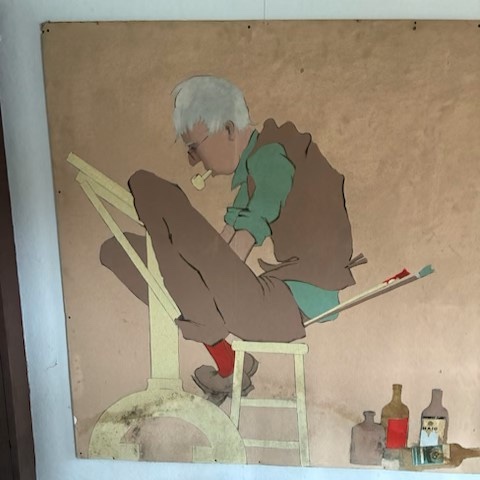
Burton ran Fine Arts until he retired in the 1960s, with his daughter Linda (Coughlan) Flint and her husband taking over. A smaller second theater was added in 1969. Years later it was divided in two, giving the present-day configuration of three theaters.
In time, theater management was turned over to businesses that rented the theater complex. Infrastructure fell into decline, to the point that the theaters were hot in summer, cold in winter, wet from roof leaks whenever it rained, dotted with broken seating and bathrooms that were an adventure. In 2003, Deco Entertainment rented the facility with an intention to do major renovations, including a new heating and cooling system, new seats and an improved sound system.
Then, in 2013, Linda Flint sold the facility to Steven “Steve” Trumble and Melanie Perry. They bought with an understanding that Deco would continue as tenants, but Deco had been operating as if there was a rent-with-an-option-to-buy arrangement, so instead Deco locked the doors and left — with a rumor that they had also taken the movie projectors.
Steve and Melanie, who had bought with the expectation that $250,000 would complete the renovations while Deco continued to operate the theater, ended up spending close to $1 million on a top-to-bottom renovation, including conversion to digital projectors. After a long delay, the work culminated in a grand reopening Nov. 5, 2014, with a showing of “Interstellar.”
The theater was closed during the COVID-19 pandemic, during which time Steve Trumble died. The theater was sold to Dafna Krouk-Gordon and Lester “Les” Gordon. They resumed theater operations in May 2022. Dafna carries on after the loss of her husband in 2025.
So, here we are today, with a 77-year-old movie theater at 21 Summer St. that still has its original entrance facade, and in the main theater and adjacent hallway, the Chinese-art-inspired paintings that were the creations of Burton J. Coughlan, the original owner. None of the neighboring towns of Concord, Acton, Stow or Sudbury have movie theaters, so the Fine Arts serves a larger regional community. The theater complex operates under its fourth owner with strong support from local communities.
This and hundreds of columns from my Beacon-Villager era are posted, with an article directory by category, at www.maynardlifeoutdoors.com


Leave a Reply