UPDATE, APRIL 30, 2026: The Town of Maynard has announced the new program will launch July 1 and is hosting free “Trash Talk” informational sessions in early May. Sessions are scheduled for Saturday, May 2 (11 a.m.–noon, Library Roosevelt Room), Sunday, May 3 (11 a.m.–2 p.m., Rod & Gun Club, 45 Old Mill Road), and Tuesday, May 5 (noon–12:45 p.m., Council on Aging, 50 Brown St.). Additional sessions will be announced. More information here.
In several months, the Town of Maynard will roll out an improved solid waste management program. This is the first in a series of articles to keep you informed. Today’s article focuses on our current solid waste management system and the challenges and trends driving the need for change.
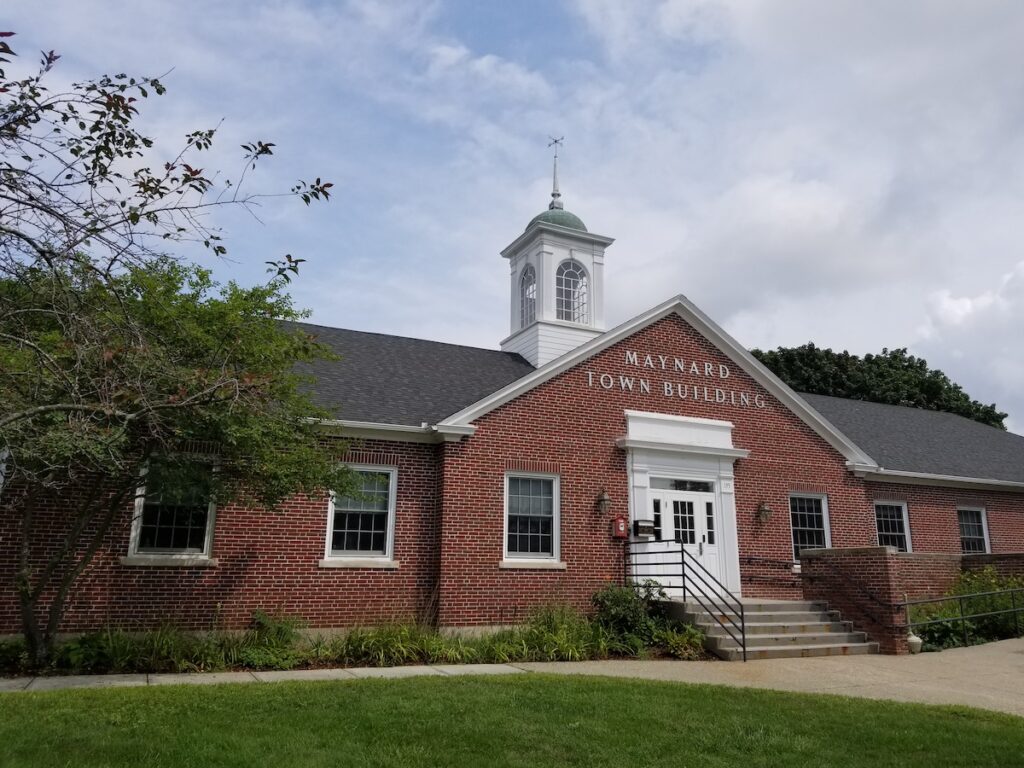
By working together, our community can implement a more effective and efficient program.
Our Current Solid Waste Management Program
In the 1990s, Maynard adopted a program called Pay-As-You-Throw, or PAYT. Residents purchased stickers and placed them on trash bags, then set the bags out for weekly collection. Bi-weekly recyclables collection was also part of the program. Maynard’s PAYT program remains much the same today.
PAYT programs work because they directly link the amount of trash each home generates to what each home pays to dispose of it. This incentivizes waste reduction.
Solid Waste Management Challenges and Trends
In recent years, municipalities across the state have faced a range of solid waste management challenges. Many are redesigning their programs to meet those challenges and keep up with innovations such as automated collection.
Rising curbside collection costs. Only five waste-to-energy facilities and 15 public landfills remain in Massachusetts, resulting in dramatically increasing collection costs. Massachusetts’ trash disposal costs are the highest in the nation and continue to climb.
Automated curbside collection. Manual pickup of bags or carts is labor intensive and slow, and the solid waste management industry faces a labor shortage. Driver injuries from repetitively climbing in and out of trucks and lifting heavy bags are an underlying cause of that shortage. Haulers have embraced automated collection — in which robotic arms pick up and dump trash cart contents into the truck — as a solution. Municipalities that don’t switch to automated collection will pay much higher costs.
Sticker prices and the town budget. Maynard’s trash sticker prices have not covered the full costs of trash and recycling services. The gap between sticker revenue and actual costs has been bridged with tax dollars, creating a strain on the town budget. Solid waste management is the second highest contract cost the town carries.
Animals. Bags left out overnight are becoming a food source for rats, mice, squirrels, raccoons and other animals.
Finding Solutions
In January 2023, the Select Board formed a Solid Waste & Recycling Task Force to assess Maynard’s trash and recycling program and make improvement recommendations, including a sustainable funding model.
Comprised of industry experts, the DPW director and a cross-section of residents, the Task Force explored best practices, gathered resident input and developed sustainable solutions. The Town Administrator, Board of Health and Sustainability Committee contributed as well.
In February 2025, the Select Board approved the Task Force’s recommendations.
Arriving Late Summer 2026: Maynard’s Improved Solid Waste Management Program
Here are highlights of what’s coming:
- An automated trash and recycling collection program, using town-issued 35-gallon trash carts and the familiar 95-gallon blue recycling carts.
- This will be an opt-in service with an annual fee. During registration, residents will make choices that best suit their needs — for example, those who don’t generate much waste may find bi-weekly trash collection sufficient.
- The town’s trash and recycling collection program will operate as a utility, similar to electric or gas service. The annual registration fee, divided into quarterly payments, will appear as a new line item on water/sewer bills.
- Only town-issued trash and recycling carts with current annual registration stickers will be collected. Yard waste collection and seasonal drop-off events will also be available to registered households. Food waste drop-off collection will be piloted in the second year.
- Costs are still being finalized and will be communicated once negotiations are complete and the Select Board has approved them. One item that can be shared now: costs will be lower than in towns of similar size to Maynard.
This article is intended to provide a high-level overview. In the coming weeks, look for additional articles in The Maynard Voice, as well as mailings and online communications with more specific details and a registration link.


Leave a Reply