
Fort Devens training Annex (Now Assabet River National Wildlife Refuge and White Pond) 5 year EPA Superfund site review scheduled for completion September 2026
The U.S. Army and the EPA conduct required Five-Year Reviews (FYR) for the Former Fort Devens and the Sudbury Training Annex to evaluate environmental cleanup effectiveness. The next FYR is currently underway for the Sudbury Training Annex and is scheduled to be completed by September 2026. [1, 2]
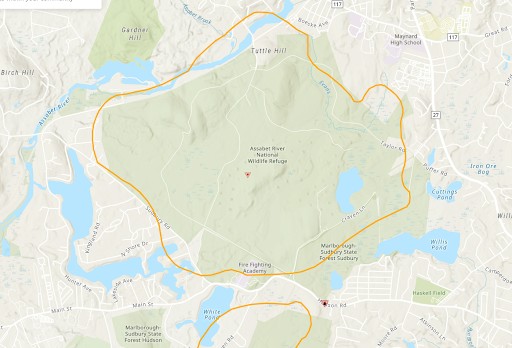
The review process for these Superfund sites involves critical evaluations and community outreach: [, 2, 3]
1. Sudbury Training Annex 2026 Review
- Location Focus: Covers the towns of Hudson, Stow, Maynard, and Sudbury. [1]
- Current Focus: The Army and EPA are evaluating the ongoing groundwater and soil remedies at Area of Concern A7 (a former landfill site) and investigating PFAS concentrations in specific areas. [1, 2]
- Community Input: The Army is actively inviting local residents to participate in community interviews. To share your input, contact Penelope Reddy, U.S. Army Corps of Engineers Project Manager, via email at [email protected] or by phone at 978-318-8160. [1]
Redevelopment at the Site
The Fort Devens Sudbury Training Annex Superfund site, a former U.S. Army military installation, covers approximately four square miles and includes portions of the towns of Maynard, Stow, Hudson, and Sudbury, Massachusetts. Established in 1942, the site served as an ammunition depot, an ordnance test station, a troop training and research area, and a laboratory disposal area. EPA identified contamination resulting from the use of pesticides and other chemicals on portions of the site and added the site to the National Priorities List (NPL) in 1990. The U.S. Army worked with EPA to remove contaminated soil, cover an on-site landfill with a cap, remove underground storage tanks, and monitor groundwater. Currently, several entities own portions of the site. In 2000, the Army transferred 2,230 acres of the site to the U.S. Fish and Wildlife Service (USFWS). USFWS established the Assabet River National Wildlife Refuge on the transferred land. In 2005, USFWS completed the construction of walking trails within the refuge. In 2008, USFWS completed the restoration of Russell Bridge. In 2010, a visitor center and other park amenities opened at the refuge. USFWS used green building techniques when constructing the visitor center, which includes a geothermal heating system and solar panels. The refuge provides recreational opportunities including hiking, canoeing, guided tours of the military bunkers on site, hunting, and fishing. USFWS’s future plans for the refuge include educational demonstration areas, restoration of on-site bunkers, an urban education area, and a rail-to-trail project at the abandoned railroad on the south side of the refuge. In 2002, the Army transferred four acres to the U.S. Air Force (USAF). USAF no longer uses this property. In 2003, the Army transferred approximately 72 acres of the site to the Federal Emergency Management Agency (FEMA). FEMA uses the land for its operations and training missions. FEMA has cleared six acres for use as a temporary antenna field.
More background and history here: https://cumulis.epa.gov/supercpad/SiteProfiles/index.cfm?fuseaction=second.redevelop&id=0100685#Limits
2. Main Fort Devens Review
- Status: The U.S. Army completed the most recent comprehensive Five-Year Review for the broader Main Fort Devens site, with the EPA concurring on the cleanup findings. [1]
- Key Issues Monitored: Ongoing actions prioritize the basewide remedial investigation of PFAS and the cleanup of historical munition contamination in areas like the Nashua River. [1, 2, 3]
- Resources: You can explore past Five-Year Review reports and monitoring data through the Former Fort Devens Environmental Cleanup Website. [1]
Leave a Reply