
Robin Schulman, long-time Maynard resident, activist, and bicycle enthusiast, went to a Mass Audubon training last December on rescuing raptors sickened from the poisonous anticoagulants used to kill rats. The poisons being used to control problems with rats and other critters/pests/vermin are making the issue much worse and the poisons are killing wild animals and household pets that eat the poisoned rats. Worse, the poisons are having the unintended consequence of increasing the rat problem. She was outraged and decided to do something about it.
When Robin approached Green Maynard, they were already working on the problem (as well as their work on reducing light pollution, making our local rivers healthy again, and stopping private jet expansion at Hanscom). They all agreed Robin should take the lead on bringing this to the town meeting. Robin got to work.
With Green Maynard’s support, Robin built a coalition of concerned citizens, gathering signatures, going to the Board of Health, the Conservation Commission, the Select Board, and the Town Manager to carry the petition through all the necessary steps. (See attached article on how to get a Citizen’s Petition through to Town Meeting.) Robin said she “found the town and Town Hall very responsive and praised them for all their help” in getting the petition to the Town Meeting.
Robin explained what her warrant would do and offered to answer any questions; but she had done such a great job explaining the problem that there were no questions and the attendees voted unanimously (there may have been one or two no hands) to pass the warrant.
Now Robin and Green Maynard are organizing a meeting to better educate the community about the problem with these poisons and ways to solve the rat problem without harmful poisons. Robin has been focused on the town’s use of the poisons. Bailey Thaxton, Vice President of Green Maynard, is taking the lead on getting a ban of the chemicals from private properties.
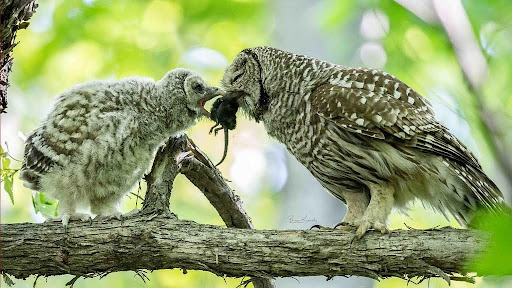
Pesticides have been used for generations to control pests like rats but they pose some risk to humans and pets. The risk to wildlife – foxes, coyotes, owls, hawks and eagles – is even greater because they hunt and eat the rats. According to the Environmental Protection Agency, Integrated Pest Management (IPM) is a multi-step approach focusing on pest prevention methods and the use of pesticides only as needed.
There are four steps of Integrated Pest Management: 1) Identify pest(s) and
monitor progress – what are the pests and how are they gaining access?; 2) Set action
thresholds – is the pest’s presence any combination of nuisance, health hazard or economic threat?; 3) Prevent pests – reduce or remove the conditions that are attracting pests including access to food, water and shelter; 4) Control pests through trapping, heat/cold treatment, physical removal, or pesticide application. The most appropriate actions will depend on the type of pest you may be trying to manage.
Regarding the control and prevention of rodents, Second Generation Anticoagulant
Rodenticides (SGARs) are a particular class of rat poison that prevents blood clotting and causes a slow death to the animal that ingests it, making them an easy target for predators like raptors, foxes, cats and dogs that hunt these small rodents. While federal law bans the retail sale of this class of rat poison, licensed pest management companies are able to purchase and use SGARs with their clients in both commercial or residential settings.
According to Mass Audubon, the Angell Animal Medical Center (Boston, MA) treats dozens of cats, dogs and other household pets for SGAR poisoning every year. When it comes to the third step of rodent prevention, there are substitutions for harmful SGARs including snap traps or electronic traps, and other methods that may require professional services including Carbon Dioxide traps or the use of dry ice. These methods control the rodent population without crossing over into other species.
The good news is that the town, which had 14 black boxes using the SGARs, has already stopped using the anticoagulants. Our schools, which have 113 of the black boxes, may still be using the dangerous poisons.
(Many thanks to Robin, Bailey, and Green Maynard for this technical information. To get involved and to learn when the presentation will be, please contact Green Maynard at https://www.greenmaynard.org/)
Leave a Reply