Long before the Assabet River Rail Trail brought walkers and cyclists through Maynard, our town’s railroad station served as a vital connection between the growing mill community and the rest of Massachusetts. The station was built during the height of the town’s industrial expansion around 1880, when the Assabet Woolen Mill was booming and rail transportation was essential for moving workers, raw materials and finished goods.
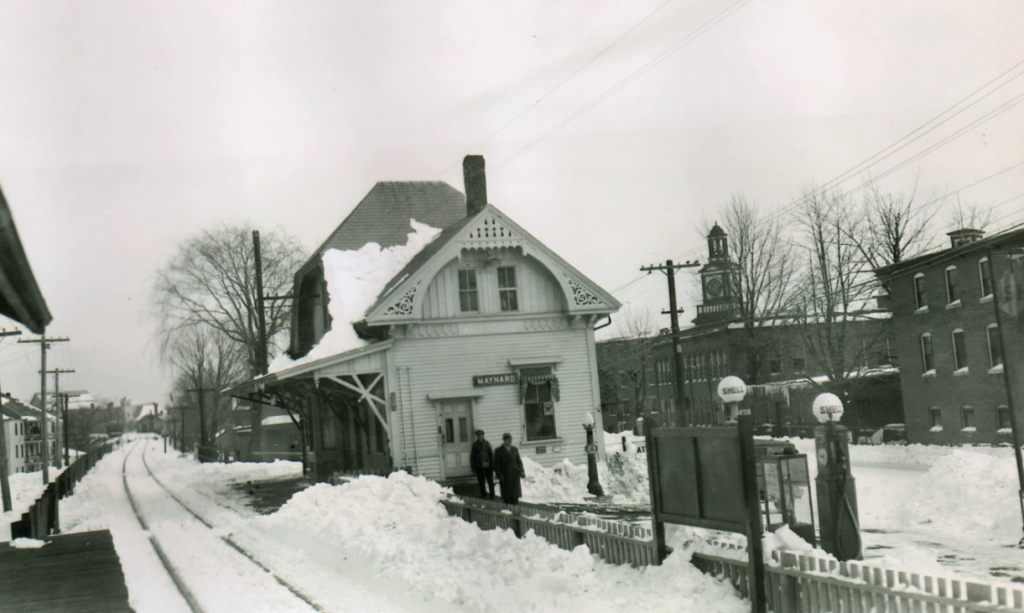
Photo Courtesy of The Maynard Historical Society
As you can see from the pictures, the station was located in the small triangle between Main Street and Railroad Street. At the time, Railroad Street was not a street, but where the railroad tracks were located.
The train was originally operated by the Fitchburg Railroad and later by the Boston & Maine Railroad. Passenger trains linked Maynard to South Acton and other regional rail lines, helping transform Assabet Village into a thriving industrial town. By the early 20th century, Maynard residents could travel by train or electric trolley, and the station became one of the community’s busiest gathering points.
If you’re a researcher, you might find some confusion about when the station was built. The source of this confusion is that the first station, which appears to have been built in 1850, was located near Sudbury Street, but was later converted into the freight station. The station at Main and Railroad was built in 1880, when the line became part of the Fitchburg Railroad Company.
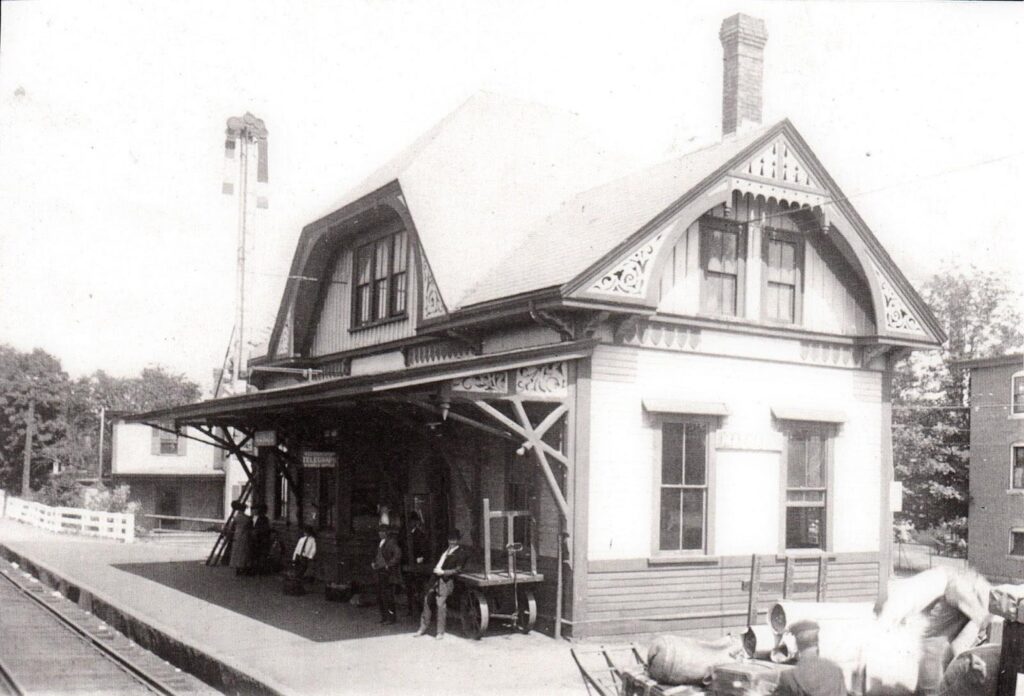
Photo Courtesy of The Maynard Historical Society
As many as 12 passenger trains ran through Maynard at one time, but as automobiles became more common after World War II, passenger rail service declined throughout Massachusetts. Passenger service was discontinued on May 16, 1958, and the station was abandoned.
Luckily, we can still picture the routes that these trains took by walking the rail trail today. Next time you’re out for a walk, imagine the sounds of trains arriving beside the mills, carrying passengers, textiles, and freight through the heart of Maynard’s industrial era.


Leave a Reply