
February is National Heart Health Month
Our hearts work hard for us all day, every day, pumping blood through our bodies, to circulate the oxygen we need to survive. When we’re stressed our hearts beat faster to help us cope; with physical exertion, they pump harder to keep up with the effort, when we’re in love our hearts rush with endorphins, sending us all aflutter.
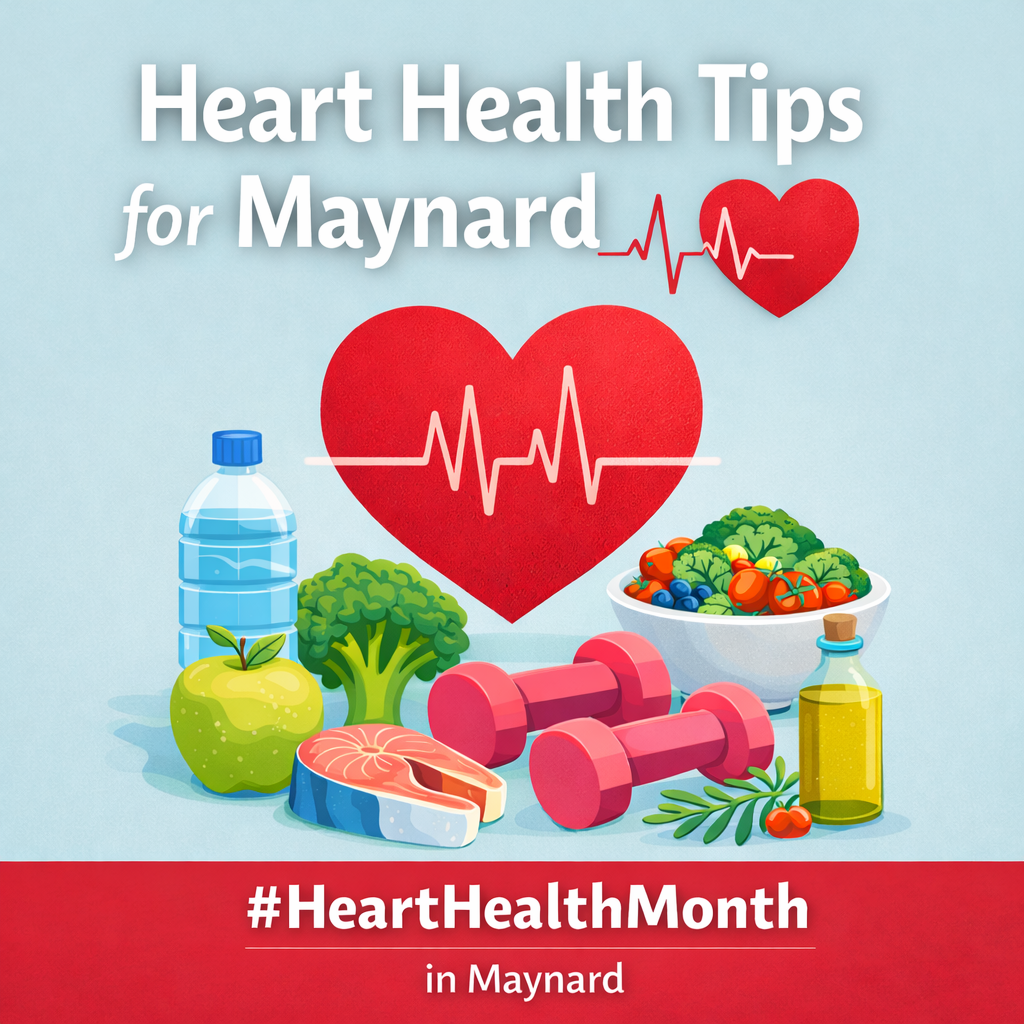
Our hearts speak for us, too. We take heart when we need courage, we speak our truths from the heart, we grieve with a heavy heart, are grateful from the bottom of our hearts, and most importantly, we love each other with all our hearts.
All that from a tiny pump that weighs just under a pound and is about the size of a fist.
In honor of National Heart Health Month, The Maynard Voice decided to give a shout-out to that plucky little muscle behind our ribs, and get some advice about how to take care of it.
We asked Maynard’s Public Health Nurse, Katie Stanislawzyk, BSN, RN for some guidelines and she was graciously complied. She says that there are three major components to maintaining heart health: exercise, nutrition and stress management, and gave breakdown for all three:
Get a Move on! Katie tells us that movement is essential to keeping our hearts in shape. Like any other muscle, it atrophies without exercise.
She says, “exercise and movement can impact our hearts by lowering blood pressure, improving cholesterol levels, and decreasing our chances of developing chronic conditions that affect heart health. The American Heart Association recommends getting at least 2.5 hours a week of moderate-intensity aerobic activity, such as brisk walking, biking, or swimming. Regular physical activity also strengthens the heart muscle, improves circulation and helps maintain a healthy weight.”
You’ve heard the expression “You are what you eat,” right? It appears to be true. Katie advises us to stay healthy with whole, healthy foods: “When we eat healthy, we protect our blood vessels and keep blood pressure and blood sugar levels in check. Some heart-healthy foods include fruits and vegetables, whole grains, lean proteins such as fish and beans, and healthy fats like olive oil and nuts. Limiting processed foods, added sugars, and sodium can further reduce the risk of heart disease. It is also important to limit alcohol intake, as excessive drinking can raise blood pressure and increase the risk of heart-related conditions.”
Take it Easy. Of course that’s easier said than done. Life offers up all manner of stresses to raise our blood pressure and cause anxiety. But with the techniques Katie recommends we can minimize their impact.
According to Katie, Long-term stress can impact the heart by raising our blood pressure and heart rate, which puts added strain on our hearts. It is important to manage stress levels by getting enough sleep, regular exercise, and relaxation techniques such as meditation, deep breathing, and spending time outdoors.”
Some quick tips:
- Take the stairs whenever possible
- Aim for 10-30 minutes of walking each day
- Avoid ultra-processed foods, sugary drinks, fried foods
- Aim for 7-9 hours of sleep a night
So take Katie’s advice to heart! See what we did there? And repay your hard working heart with some tender loving care.
Move, as often as you can. Find some colorful berries for your cereal and toss the donuts. And take a few moments every day to stop and smell the roses.
Thank you Nurse Katie Stanislawzyk for helping us show a little love to our hearts!
Leave a Reply